The Cargo Hold Doesn’t Kill Pets. Human Ignorance Does.
A brutally honest guide from a courier with 12+ years experience and 5,500+ animals transported safely. Why the cargo hold is not to blame — and what really kills pets on planes.
From St Petersburg to Dubai with K9 JETS: A Bernese Mountain Dog's Extraordinary Journey
The extraordinary journey of Rudiger, a Bernese Mountain Dog travelling from St Petersburg to Dubai via Europe and London. Discover the challenges of veterinary paperwork, the urgent UK export health certificate, an unforgettable K9 JETS private flig
Из Санкт-Петербурга в Дубай с K9 JETS: путешествие Рюдигера
История путешествия бернского зенненхунда Рюдигера из Санкт-Петербурга в Дубай через Европу и Лондон. Ветеринарные документы, срочное оформление британского сертификата 3926EHC, перелёт с K9 JETS и удивительное гостеприимство Jetex Dubai.
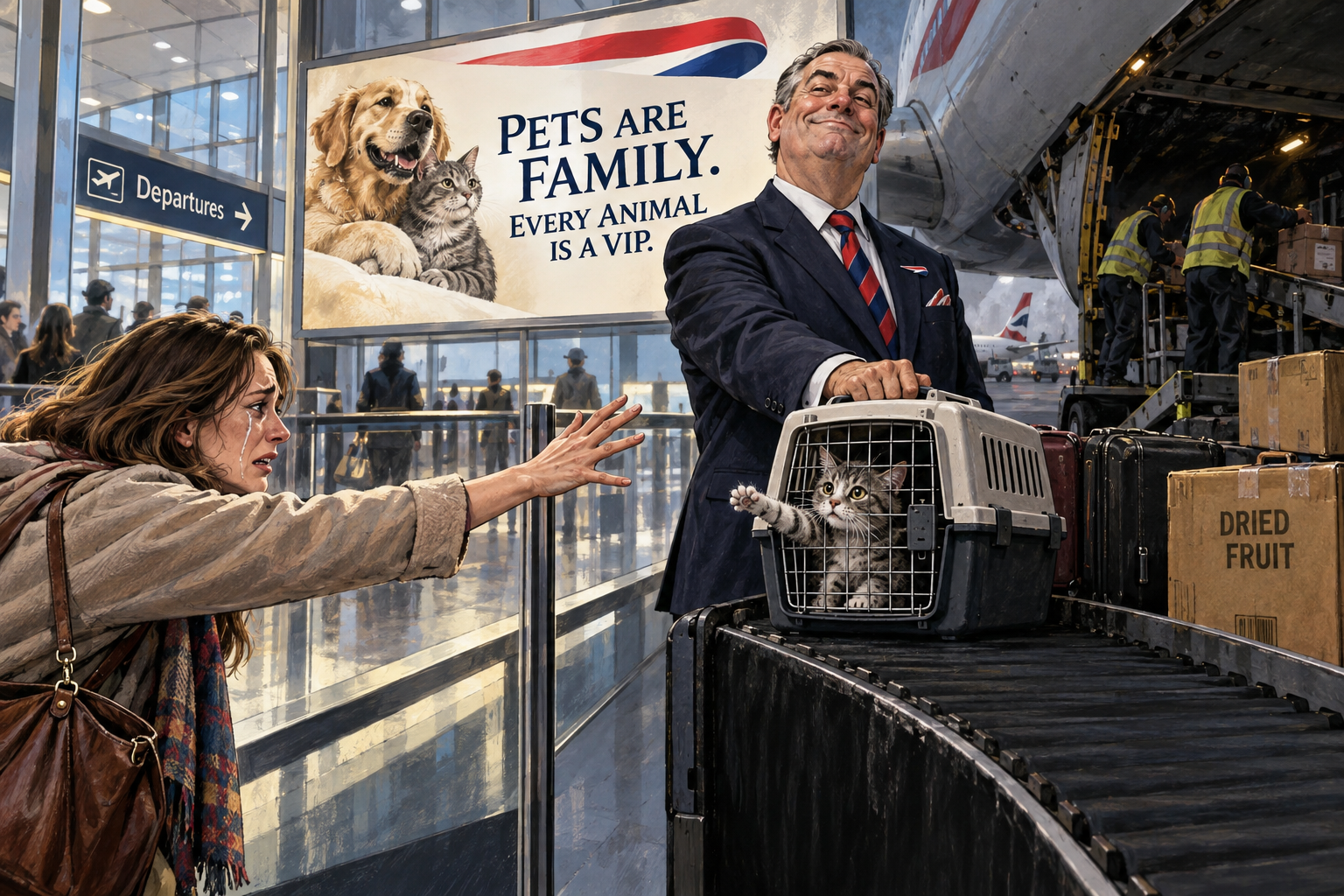
When the Pride of the Nation Stoops to Cheap, Shameless Hypocrisy
British Airways calls pets members of the family and promises VIP treatment, yet refuses to let even the smallest pet remain beside the person they love and trust.
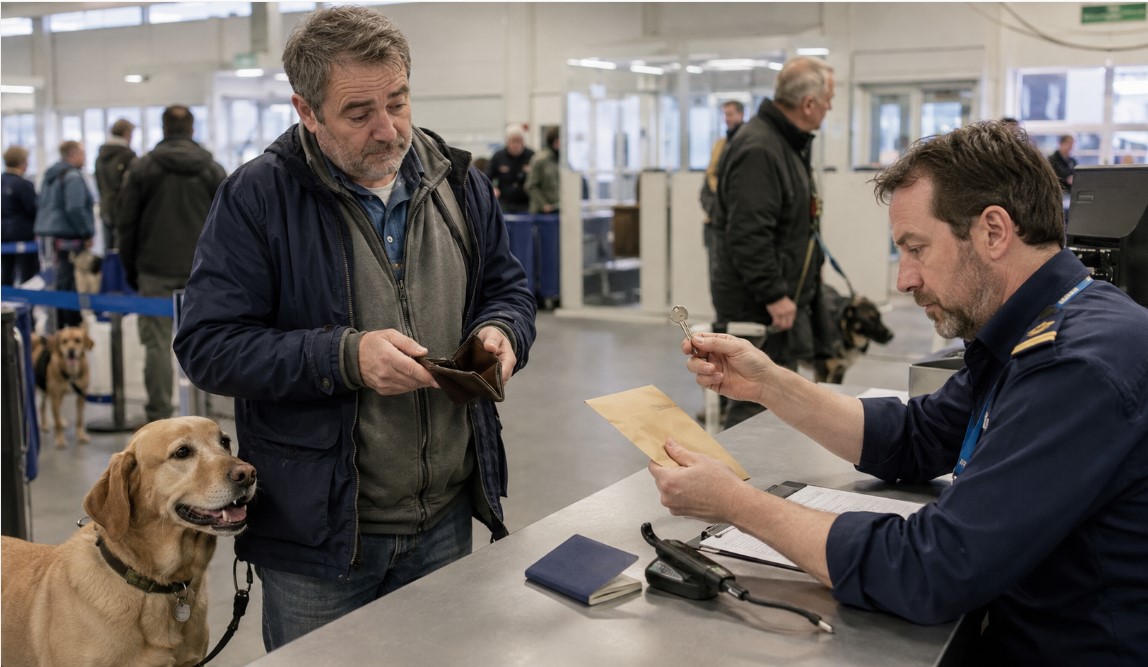
Tell the Truth and Pay £250: Brussels Has Reinvented Honesty
People often ask me whether their EU pet passport will still be accepted. The new Regulation offers two impressive words — “habitual residence” — but no clear test, standard evidence or workable border procedure. Tell the truth, and honesty may cost
 Loading More Items
The Cargo Hold Doesn’t Kill Pets. Human Ignorance Does.
The Cargo Hold Doesn’t Kill Pets. Human Ignorance Does.
A truth from a courier who has transported over 5,500 cats and dogs in 12 years — and hasn’t lost a single one.
You’re afraid of the cargo hold.
You’ve read stories about cats dying on planes. Dogs not surviving flights. Owners cursing the airlines.
And yes, you’re afraid.
But you’re not afraid of what’s truly dangerous.
You’re not afraid of your own ignorance.
You’re not afraid of the untrained courier.
You’re not afraid of a crate that’s five centimetres too small.
You fear the metal tube and the overhead light — but not the fact your dog didn’t get water that morning.
I’ve transported over 5,500 pets — cats and dogs — in the last 12 years.
And unlike the horror stories you read online?
Not one of mine has died. Not even gotten sick.
Because I prepare each pet for the journey.
And I prepare myself — for each pet’s journey.
There are no “standard routes”.
There are only different animals, with different temperaments, fears, and habits.
And that’s why our trips go smoothly.
When animals die in transit – it’s not the plane.
It’s the person who didn’t ask how the hold works.
It’s the person who didn’t read the crate guidelines.
It’s the person who stuffed a cat into a soft cabin bag because “that’s easier in the cabin”.
The cargo hold isn’t a prison.
It’s climate-controlled — the same temperature and pressure as the passenger cabin.
The only difference?
You’re sipping tomato juice.
Your pet is flying with your hope that you did things right.
And if you did — they’ll sleep. They won’t tremble.
They’ll feel safe.
Because someone thought ahead.
And if you didn’t?
Then it doesn’t matter where they’re flying.
Even on your lap. Even in your arms.
You are more dangerous than the plane.
When pets die in the cabin — no one posts about it.
Because in the cabin — there’s no airline to blame.
No baggage handler who “moved the crate wrong”.
No terminal staff who “left them on the tarmac”.
No one to shift the guilt onto.
So when a pet dies at your feet — you zip the carrier closed and say:
“Must’ve been her heart…”
Then you log in, and post:
“Never check your pet into cargo!”
Because cargo — is blameable.
You get to feel like the victim.
You get to pretend it wasn’t you.
That “if only…”, “they messed up”, “planes aren’t for animals…”
No. It’s not the plane.
Not the hold.
It’s you.
With your cluelessness. Your shortcuts. Your ‘I thought it’d be fine’.
The most dangerous compartment on any plane is the head of the person who takes a pet on board without a shred of responsibility.
What Real Pet Responsibility Looks Like
1. Preparation, not panic
- IATA-approved crate. Correct size.
- Ventilation. Bedding. Water. Litter tray for cats.
2. Knowing biology
- No food 8–10 hours before departure.
- Walk your dog before the trip.
- Clean tray and litter for cats, checked during layover.
- Water available in small amounts.
- Sedatives? Never.
3. Talking to the owner
- Is the pet scared of crates, strangers, or noise?
- When does it normally go to the toilet?
- Does it have preferences for bedding or food?
4. Knowing the paperwork
- Up-to-date rabies vaccinations.
- Deworming required for dogs (before entering UK).
- Microchip linked to passport or health certificate.
5. Individual handling
- One crate per animal.
- Never combine “for convenience”.
- This is not luggage. They aren’t boxes.
6. Escort, not delivery
- You monitor. You observe. You never zone out.
- You don’t just deliver. You protect.
7. No sedatives. Ever.
Sedatives suppress breathing, confuse temperature regulation, and prevent natural responses.
They’re used only in aggressive freight animals — not family pets.
Use this instead:
A 1.5 × 2.5 cm piece of cardboard with one drop of lavender oil, placed beside the crate.
That’s enough for a 4–5 hour flight of calm.
8. Know your breed: brachycephalic dogs
- Pugs, bulldogs, shih-tzus and other flat-faced breeds must fly in crates one size larger than usual.
- This reduces stress and helps them breathe freely.
- Some airlines allow them again — because they understood this works.
9. It’s not about comfort. It’s about accountability.
If you’re responsible — you’ll remember this the first time.
You’ll check. Ask. Verify. Prepare.
If you’re not — you’ll argue. Deny. Pretend you “know better”.
And you’ll remain the biggest danger your pet will ever face.