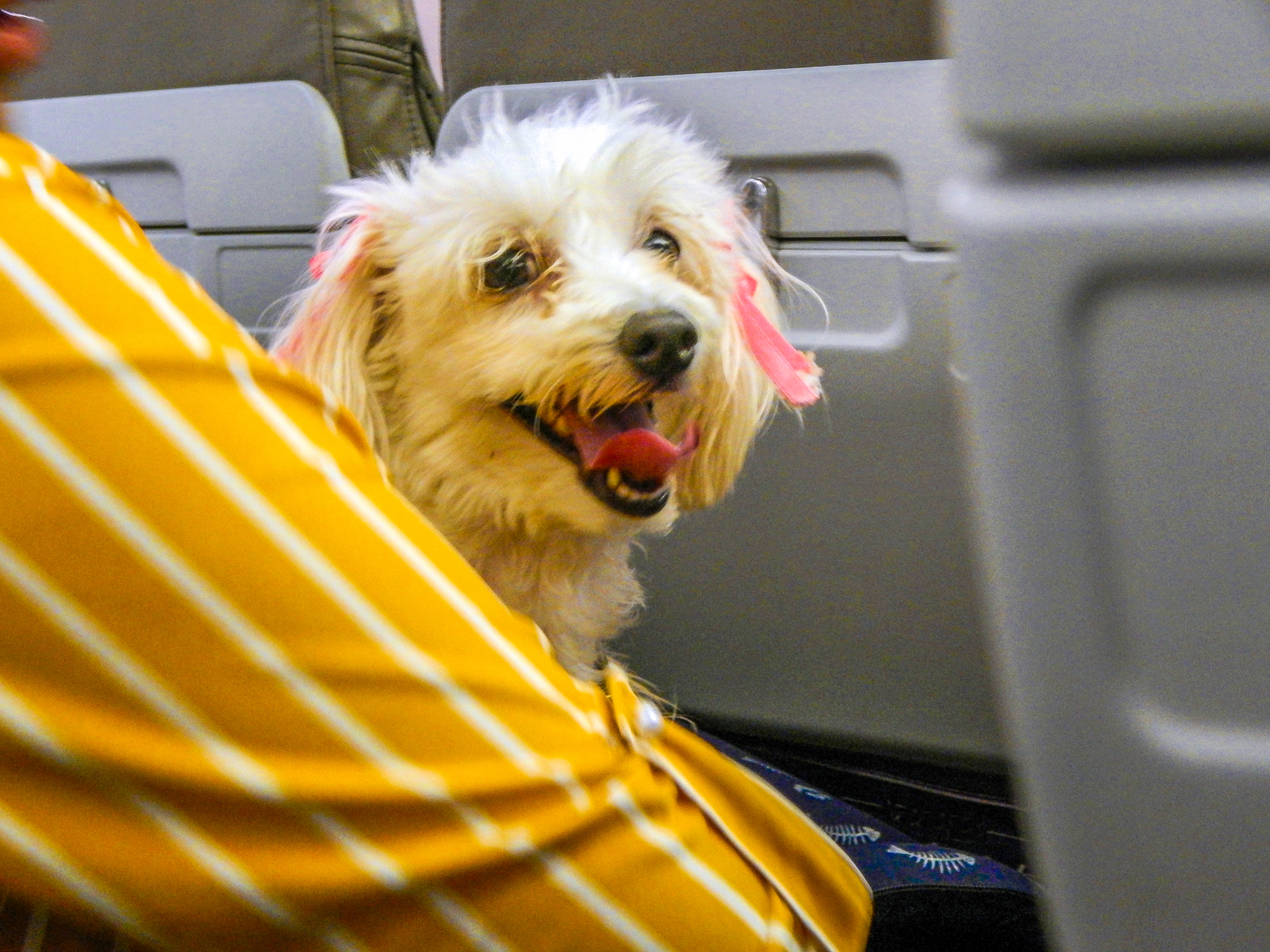
How to Travel with a Cat or Dog by Air: Safe Cabin and Hold Transport Guide
A practical guide to safe air travel with cats and dogs, including cabin rules, aircraft hold transport, choosing the right carrier or crate, airport security, feeding, water, and calm preparation before the flight.
When the Pride of the Nation Stoops to Cheap, Shameless Hypocrisy
British Airways calls pets members of the family and promises VIP treatment, yet refuses to let even the smallest pet remain beside the person they love and trust.
Tell the Truth and Pay £250: Brussels Has Reinvented Honesty
People often ask me whether their EU pet passport will still be accepted. The new Regulation offers two impressive words — “habitual residence” — but no clear test, standard evidence or workable border procedure. Tell the truth, and honesty may cost
USA Pet Travel Update 2026: CDC Changes Approved Rabies Titre Laboratories
CDC updated its list of approved rabies serology laboratories for dogs entering the United States from high-risk dog-rabies countries. The transition period for removed laboratories ended on 12 July 2026. We explain which laboratories are affected, w
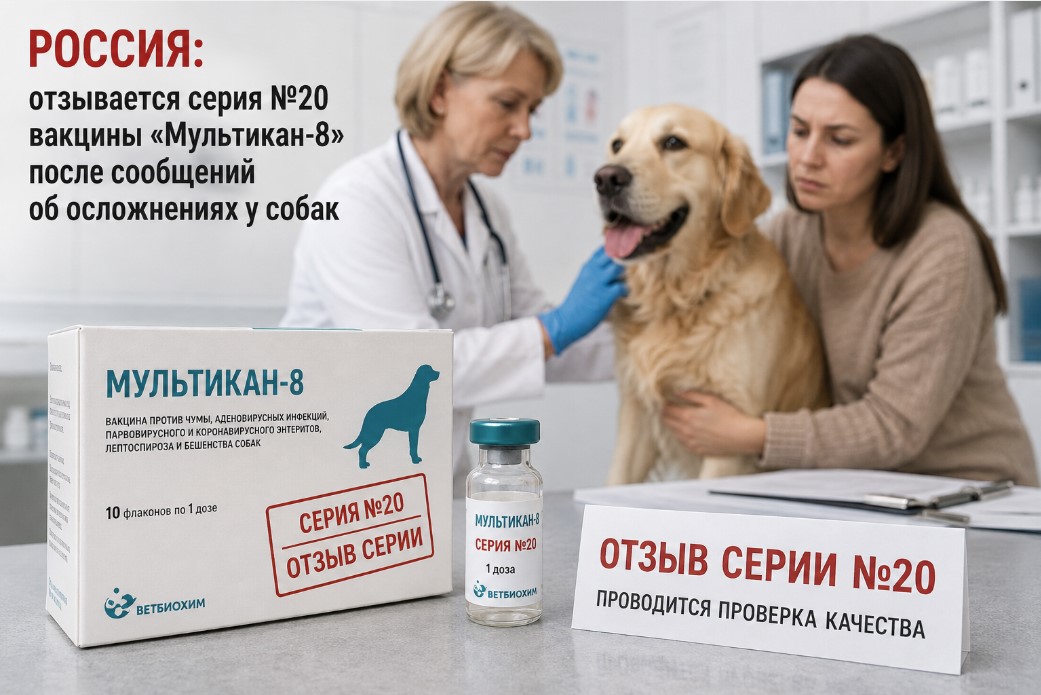
Россия: отзывается серия №20 вакцины «Мультикан-8» после сообщений об осложнениях у собак
В России отзывается серия №20 вакцины для собак «Мультикан-8». Проверка начата после сообщений о серьёзных осложнениях и случаях гибели собак. Причинная связь с вакциной пока официально не установлена.
 Loading More Items
How to Travel with a Cat or Dog by Air: Safe Cabin and Hold Transport Guide
How to travel with a cat or dog by air:
safe pet travel in the cabin and aircraft hold
A complete practical guide to safe pet travel by air with cats and dogs
Introduction: what matters before flying with a pet
Travelling with a pet by air is always a small adventure.
For a person, it is simply a journey. For an animal, it is an entirely new world.
The airport is noisy, people are hurrying in every direction, and announcements come one after another.
Somewhere in the middle of all this human commotion sits a small traveller in a carrier — a cat or a dog.
Every animal reacts to such events in its own way.
Some calmly observe what is happening around them.
Others may start to worry from the very fact of the journey itself.
Here it is important to remember one simple thing:
every pet has its own character and its own temperament.
Some are philosophers, and some are, let us say, rather more highly strung.
The owner's job is to make sure the journey is calm, safe and properly prepared from the start.
Safe pet travel by air begins long before boarding. It begins with choosing the right type of transport, the right carrier or crate, and the right pace of preparation.
Flying with a pet: cabin or aircraft hold
When a cat or dog can travel in the cabin
Most airlines allow pets to travel in the cabin if their weight does not exceed about 8 kilograms including the carrier.
But relying on weight alone is not entirely correct.
Sometimes a pet weighs, for example, 7 to 7.5 kilograms, but is still quite large in build.
In that case, a carrier that must fit under the aircraft seat may be too cramped.
And if an animal feels cramped, it starts to become anxious.
That is why, in some cases, it is much more sensible to choose a spacious travel crate and arrange transport in the aircraft hold.
When it is better for a pet to travel
in the aircraft hold
There is a category of animals for whom travelling in the cabin may actually be harder than travelling in the aircraft hold.
This applies above all to:
- pets that are not used to being handled
- animals that are afraid of people
- very timid cats or dogs
- pets that only feel comfortable with their owner
Sometimes an owner says:
“He is friendly… but only with me.”
In such cases, it is better not to create extra stress.
An animal often feels much calmer in its own closed crate, where nobody is touching it, staring at it, or trying to make friends at the worst possible moment.
Which pets usually cope better with
cabin travel
Pets that usually travel well in the cabin are those that:
- are calm by nature
- enjoy human contact
- are relaxed around people
- are not afraid of being touched
Such animals usually cope more easily with the journey when travelling close to their owner.
Pet carrier requirements for cabin travel: size and comfort
For cabin travel, a soft carrier with a firm base is usually used.
The size of the carrier must allow the pet to:
- lie down comfortably
- change position
- avoid feeling cramped
If a cat absolutely refuses to sit in a soft carrier, there is no point trying to force it into a life philosophy it clearly does not share.
In that case, it is better to use a rigid plastic transport crate.
How to choose a safe pet crate for the aircraft hold: safety and construction
This is one of the most important parts of the whole journey.
There is a huge range of pet crates on the market.
But not all of them are suitable for air travel.
Some models are made from very thin plastic.
In a shop they may look perfectly respectable.
In real life, however, such crates may turn out to be unreliable.
And a crate is, in effect, a small house of safety that protects the pet throughout the journey.
Signs of a good pet crate for air travel
Strong plastic
The walls of the crate should be properly rigid.
If the plastic bends easily under your hand, that is a bad sign.
Bolted connection between the two halves of the crate
A good crate consists of two parts:
- the upper part
- the lower part
These parts must be joined with bolts.
If the crate is held together only by plastic clips, that is not enough.
Metal door
The door should be metal and fitted with a reliable lock.
Ventilation
The crate must have ventilation openings on all four sides.
Examples of suitable pet crates
In different countries, such crates are sold under different brand names.
For example, Triol crates are popular in Russia.
In other countries they may be sold under another name, but the construction is the same.
That is why it is better to focus not on the brand, but on the actual build and design.
Should you use wheels on a pet crate: why usually the answer is no
At first glance, wheels may seem convenient.
In practice, they are usually unnecessary.
First, when the crate is checked into the aircraft hold, the wheels have to be removed anyway.
Second, rolling a crate on small plastic wheels is not a good idea.
Such wheels are:
- small
- hard
- without shock absorption
Every uneven patch of floor is transmitted directly into the crate.
And inside the crate, the noise is amplified as well.
Imagine being put inside a box and rolled through an airport on a rattling trolley.
One can see why that would not improve anyone's mood.
It is far better to place the crate on an ordinary airport luggage trolley and calmly take it to the check-in desk.
How to prepare a pet crate for a flight: bedding and a litter tray for a cat
A piece of cardboard wrapped in a disposable absorbent pad is placed on the bottom of the crate.
It is best to secure the pad from the inside with masking tape so that it does not shift.
Litter tray for a cat
A small litter tray can be placed at the back of the crate.
Approximate size:
15 × 35 centimetres and about 2.5 centimetres high.
Personally, I use small kitchen baking trays.
The tray is placed inside a bag, then cardboard is placed on top, and a thin layer of litter is added over the cardboard, preferably pellets without dust.
You should definitely take the following with you:
- spare bags
- spare absorbent pads
- a spare cardboard insert for the toilet area
- a rubbish bag
If necessary, the litter tray can be changed very quickly.
The bag is effectively turned inside out, and all used contents remain in the bag. Changing the tray takes exactly one minute.
Cat harness and dog collar: safety at the airport and during security screening
Harness for a cat
It is better to put a comfortable harness on a cat. One like the one shown in the photo.
It is needed:
- when going through security screening
- when opening the carrier
- in case the cat gets frightened and tries to run away
Collar for a dog
For dogs at the airport, it is better to use a reliable collar rather than a harness.
Many harnesses use plastic fastenings.
With a strong pull, such a fastening may come undone.
That is why the collar must be:
- properly fitted
- fastened tightly enough
- designed in such a way that the dog cannot slip its head out of it
Preparing a pet for a flight: feeding, water and lavender
Feeding a pet before the flight
It is better not to give the pet a full meal during the 10 hours before departure.
If the flight is in the morning, you can give 60 to 70 per cent of the usual portion.
Preparing a dog
Before the journey, a dog absolutely must have a proper walk.
Preparing a cat
A cat is, in essence, a person in a fur coat.
Only this particular person does not like fuss, haste or sudden changes in the slightest. It annoys him.
His natural state is calm, steadiness and the gentle flow of time.
A cat has, in essence, already managed everything everywhere.
He sits quietly, looks at the world, and sincerely does not understand why people are forever rushing about when life is perfectly fine already.
That is exactly why a cat should be prepared for travel gently and calmly.
Without fuss.
Without nerves.
Without packing at the last minute.
The calmer the person behaves, the calmer the cat feels.
After feeding, it is important to make sure that the cat has used the litter tray.
Every owner usually knows their pet's routine.
It is best to adjust feeding in line with that routine.
Water during the journey
Water can be offered in small portions.
But you need to understand that many cats drink very little during travel.
This is a normal response to stress.
Lavender oil for calming
Before the journey begins, you can place 2 to 3 drops of natural lavender essential oil on the edge of the absorbent pad inside the carrier or transport crate.
Lavender has a mild calming effect and helps the animal relax a little.
As a rule, the effect lasts for about 4 to 5 hours, after which the procedure can be repeated if necessary.
It is important to remember that only a few drops are needed. Essential oils are powerful, so the rule here is sensible moderation. If you accidentally apply more, make sure you replace the pad.
If one allows a small comparison, then for a cat it is rather like a lady of mature elegance having a modest glass of fine French cognac before a flight:
yes, the eyes brighten, the soul becomes calmer, and somewhere inside a pleasant warmth appears… and suddenly the journey is viewed with far more philosophy. The shaking seems less offensive, and even the people look slightly improved…
The main thing is not to turn this into a tasting session. A couple of drops are quite enough for the little traveller to feel calm and confident.
It is very important to remember one more rule: under no circumstances should the amount of lavender be increased.
Sometimes an owner may think that the cat has suddenly become anxious for no reason, and there may be a temptation to add a few more drops. That should not be done.
Cats do not usually panic for no reason.
If a cat suddenly becomes distressed, there is almost always a very clear reason for it.
Most often this happens when the cat has been to the toilet inside the carrier, and an unpleasant smell has appeared.
To a person this may seem a small matter, but to a cat, whose sense of smell is far more sensitive, the situation quickly becomes deeply unpleasant.
That is why, if the cat begins to get anxious, the first thing to do is check the bedding.
If it is soiled, it must be replaced as quickly as possible.
After that, calm usually returns almost at once. Because, as practice shows, cats are sensible creatures and remarkably clean. And, unlike some members of our species, they do not enjoy remaining where the atmosphere has become, let us say, less than delightful.
Airport and aircraft: security screening, carrier zips, boarding and pet behaviour
Going through airport security
with a pet
At security screening, the carrier is sent through the X-ray machine.
The pet must be taken out and held in your arms, pressed gently to your chest.
If the cat is wearing a harness, it can be additionally secured with a finger.
After screening, the animal is carefully returned to the carrier.
Securing the zip on the carrier
Some cats know perfectly well how to open the zips on carriers.
That is why it is better to join the two zip pulls together with a small plastic tie.
Keeping things calm at the airport
While waiting to board, it is better to choose quiet places.
Avoid:
- noisy cafés
- children's play areas
- crowds of people
The calmer the surroundings, the easier it is for the pet.
Remember, you must stay in control of the pet and avoid situations that could lead to it escaping at the airport.
Take-off and landing
If the cat is comfortable with handling, you can slip your hand into the carrier and stroke it.
This helps the pet feel the owner's presence.
Toilet during the journey and panic attacks
If the cat has been to the toilet inside the carrier, the bedding must be changed immediately.
The cat must not remain inside a dirty carrier.
If this happens, you have one minute to change the bedding in the carrier.
Otherwise, the cat may go into a panic attack, and that is very difficult to stop. Very often, if the moment is missed, you may not even be able to pick it up afterwards, because the cat is no longer in control of itself, and it does not matter that it knows you or that you are its owner.
The aircraft hold for pets: conditions and what happens after check-in
The aircraft hold for pets: what not to be afraid of
Many owners are afraid of the aircraft hold.
But on passenger aircraft, animals are transported in a special section.
In that section:
- the same temperature is maintained as in the cabin
- ventilation is operating
- many aircraft have lighting
So animals are not left in the cold or in darkness.
What happens to the pet after check-in
After check-in, the crate is usually moved on a special trolley.
Under standard handling practice, animals are usually:
- loaded towards the end of baggage loading before departure
- unloaded as a priority after arrival
But much depends on the particular airport and its staff.
That is why a correct and sturdy crate remains the most reliable protection for the pet.
In conclusion: how to make flying with a pet calmer and safer
Travelling with a pet is always a little more than simply going from one point to another.
For a person, it is a few hours on the road.
For a cat or a dog, it is a small adventure in which everything is new: sounds, smells, people and space.
But if you prepare calmly and carefully, travelling with a cat by air or travelling with a dog by air is usually much easier than many people expect.
Animals are very sensitive to the state of the person beside them.
If the person is calm and confident, the pet usually understands quite quickly that everything is all right.
And then the journey stops being pure stress and becomes simply another stage of life that can be lived through calmly.
Safe pet travel is not built on panic, heroics or last-minute improvisation. It is built on preparation, good judgement and a decent carrier or crate — which is rather less glamorous than drama, but much more useful.
About the author
My name is Vlad Kotlis.
I am a courier for your pets and a specialist in the legislation governing the movement of animals between countries — above all between the United Kingdom, the countries of the European Union, the United States, the United Arab Emirates and a number of other jurisdictions.
My work is to help pets travel safely and without unnecessary stress.
And if everything is prepared properly, many of them cope with the journey much more calmly than their owners usually imagine.
If this guide has been useful
I shall be glad if you share it with friends.
Especially with those who have cats or dogs and who may one day face the question of travelling together with their four-legged companion.
Sometimes one small piece of advice read in advance can make the journey much calmer both for the pet and for the person.
And a calm journey is perhaps the best gift we can give to those who trust us with their life and their small furry heart.