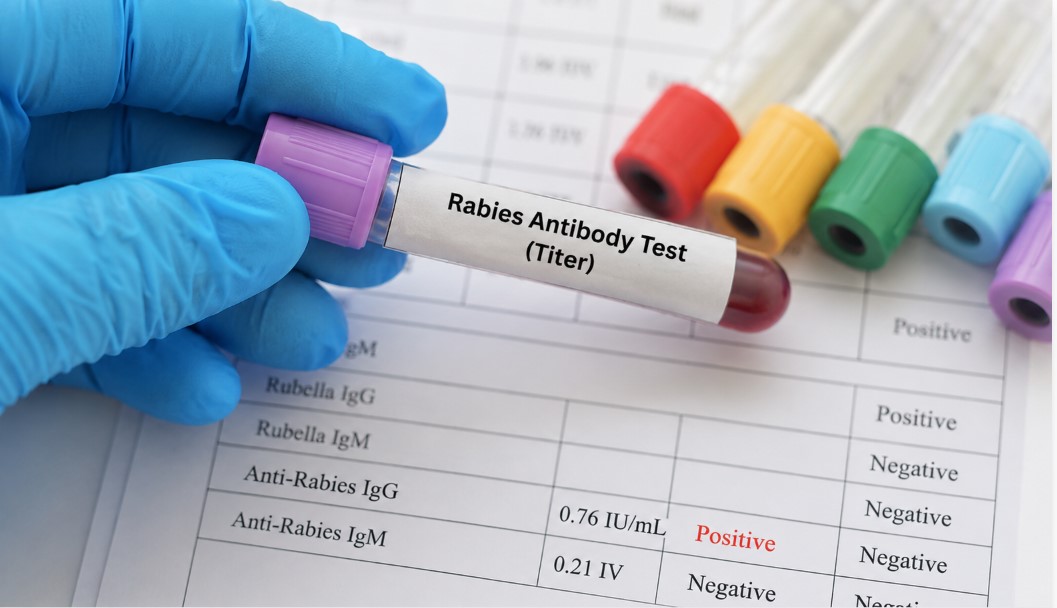
USA Pet Travel Update 2026: CDC Changes Approved Rabies Titre Laboratories
CDC updated its list of approved rabies serology laboratories for dogs entering the United States from high-risk dog-rabies countries. The transition period for removed laboratories ended on 12 July 2026. We explain which laboratories are affected, w

When the Pride of the Nation Stoops to Cheap, Shameless Hypocrisy
British Airways calls pets members of the family and promises VIP treatment, yet refuses to let even the smallest pet remain beside the person they love and trust.

Tell the Truth and Pay £250: Brussels Has Reinvented Honesty
People often ask me whether their EU pet passport will still be accepted. The new Regulation offers two impressive words — “habitual residence” — but no clear test, standard evidence or workable border procedure. Tell the truth, and honesty may cost
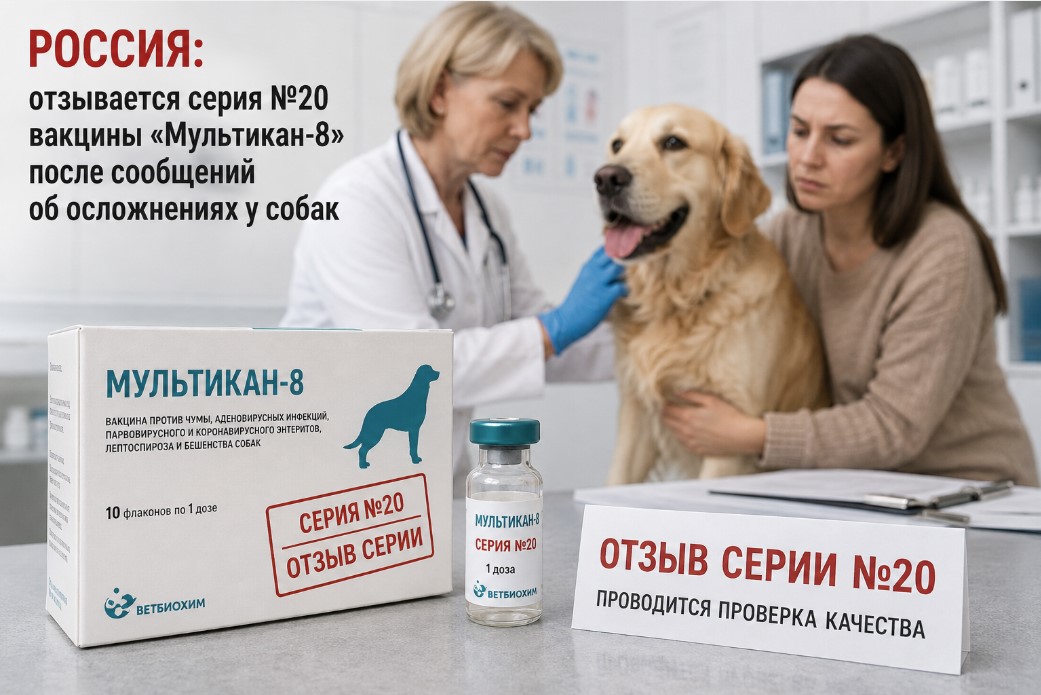
Россия: отзывается серия №20 вакцины «Мультикан-8» после сообщений об осложнениях у собак
В России отзывается серия №20 вакцины для собак «Мультикан-8». Проверка начата после сообщений о серьёзных осложнениях и случаях гибели собак. Причинная связь с вакциной пока официально не установлена.

Serbia, Montenegro and pet travel to Great Britain: an important clarification
Serbia and Montenegro no longer require a rabies antibody titre test for pets entering the EU, but Great Britain has not confirmed the same change. For travel to the UK, the rabies blood test should still be treated as required unless GOV.UK or APHA
 Loading More Items
USA Pet Travel Update 2026: CDC Changes Approved Rabies Titre Laboratories
USA pet travel update 2026:
CDC changes approved rabies titre laboratories
Important new laboratory rules for foreign-vaccinated dogs travelling to the United States from high-risk dog-rabies countries
Pet owners planning to bring a dog into the United States from a country classified by the US Centers for Disease Control and Prevention (CDC) as high risk for dog rabies should pay particular attention to one part of the entry requirements: where the rabies antibody titre test was performed.
For certain foreign-vaccinated dogs, having a positive rabies antibody test result is not enough. The test must come from a laboratory that is currently included in the official list of CDC-approved rabies serology laboratories.
Important update:
CDC changed its approved laboratory list on 12 January 2026. The temporary transition period for results issued by laboratories removed from the list ended on 12 July 2026.
What changed on 12 January 2026
On 12 January 2026, CDC updated its list of laboratories approved to perform rabies serology testing for dogs entering the United States.
Several laboratories in different countries were removed from the approved list.
CDC introduced a six-month transition period. Results from laboratories removed on 12 January could still be accepted only when both of the following conditions were met:
the blood sample was collected on or before 12 January 2026;
and
the dog entered the United States on or before 12 July 2026.
That transition period has now ended.
From 13 July 2026, if a rabies serology result comes from a laboratory that is no longer on the current CDC-approved list, a new result from a currently approved laboratory is required.
Which laboratories were removed
CDC identified the following laboratories as having been removed from its approved list on 12 January 2026:
Brazil
Instituto Pasteur
China
Academy of Military Medical Sciences Military Veterinary Research Institute, Laboratory of Epidemiology, Centre for Rabies Antibody Assay
Animal Disease Diagnostic Center, Institute of Animal Health, Guangdong Academy of Agricultural Sciences
Japan
Ministry of Agriculture, Forestry and Fisheries, Animal Quarantine Service
Russia
NoviStem LLC
Diagnostic and Prevention Research Institute for Human and Animal Diseases (DPRI)
South Korea
Komipharm International Co. Ltd (KRSL)
Tunisia
Pasteur Institute of Tunis, Rabies Laboratory
For dog owners in Russia:
A previous result issued by NoviStem LLC or DPRI should not be assumed to remain acceptable for a future journey to the United States. The current CDC laboratory list must be checked before relying on an existing titre result.
Which Russian laboratories are currently accepted by CDC?
As of the current CDC list, two laboratories in Russia remain approved for rabies serology testing for dogs:
Federal State Budgetary Institution: Federal Centre for Animal Health
FGBI ARRIAH / ФГБУ «ВНИИЗЖ»
Federal State Budgetary Institution: The Russian State Centre for Animal Feed and Drug Standardization and Quality
FGBU VGNKI / ФГБУ «ВГНКИ»
The laboratory list should always be checked again before the blood sample is taken, because CDC can update the list when new information becomes available.
Official CDC laboratory list: CDC-approved rabies serology laboratories
Which dogs need a CDC-approved rabies titre?
This requirement does not apply to every dog entering the United States.
The rabies serology requirement is particularly important for dogs vaccinated against rabies outside the United States that have been in a CDC high-risk country for dog rabies during the six months before entering the US.
CDC looks at the dog's travel history during the previous six months — not simply the country from which the final flight departs.
For example, moving a dog from Russia to a low-risk country for several weeks or months does not automatically remove the additional US requirements if Russia still falls within the dog's six-month travel history.
Main CDC requirements for the rabies antibody titre
For a foreign-vaccinated dog from a high-risk country, CDC sets specific conditions for a valid rabies serology result.
the microchip must be implanted before the rabies vaccination used for the US entry requirements;
after the dog's first valid rabies vaccination, the blood sample must be taken at least 30 days later;
the blood sample must also be taken at least 28 days before entry into the United States;
the sample must be tested by a CDC-approved rabies serology laboratory;
CDC considers a titre of 0.5 IU/mL or higher to be adequate.
Dogs with a continuous history of valid rabies vaccinations given after microchip implantation can have blood collected after a booster without repeating the initial 30-day waiting period, provided the conditions set by CDC are met and there has been no lapse in vaccination coverage.
A passing titre result can remain valid for the life of the dog only while rabies vaccination coverage remains continuous and the laboratory remains approved by CDC.
If vaccination coverage lapses, the dog requires a new valid rabies vaccination and a new rabies serology test in accordance with CDC rules.
What happens if the dog does not have a valid titre?
For a foreign-vaccinated dog that has been in a high-risk country during the previous six months, the absence of a valid CDC-approved rabies serology result substantially changes the entry procedure.
The owner or importer must arrange entry through a CDC-registered animal care facility.
Foreign-vaccinated dogs in this category are examined and revaccinated with a US-licensed rabies vaccine after arrival. Where the dog does not have a valid rabies serology titre, the reservation must normally also include a 28-day quarantine.
Practical advice:
Do not leave the rabies titre check until shortly before departure. CDC recommends discussing collection of the blood sample with the veterinarian around 60 days or more before travel, because laboratory turnaround times vary.
Which countries does CDC classify as high risk for dog rabies?
CDC maintains a specific list of countries and political units considered to present a high risk of importing dog-maintained rabies virus into the United States.
If a dog has been in any of these countries during the six months before US entry, the additional high-risk-country requirements may apply.
The current CDC list, updated on 15 April 2026, includes, among others:
Russia;
Turkey;
United Arab Emirates;
Ukraine;
Belarus;
Armenia;
Azerbaijan;
Georgia;
Kazakhstan;
Kyrgyzstan;
Uzbekistan;
China, excluding Hong Kong, Macau and Taiwan;
India;
Thailand;
Philippines;
Indonesia;
Iran;
Israel, including the West Bank and Gaza;
Jordan;
Kuwait;
Qatar;
Egypt;
Morocco, including Western Sahara;
Tunisia;
South Africa;
Brazil;
Colombia;
Peru;
Ecuador;
and many other countries in Africa, Asia, the Middle East and Latin America.
This is not the complete list. The current official list should always be checked before planning the journey.
Official CDC high-risk country list: High-Risk Countries for Dog Rabies
If a country is not on the CDC high-risk list, CDC treats it for dog-import purposes as dog-rabies free or low risk.
When was the high-risk country list introduced?
CDC has used its country risk classification for dog-maintained rabies virus variants since 2018.
CDC has stated in its federal rulemaking that since the list was established, only one additional country had been added to the high-risk list, while several countries had been removed after improvements in rabies control and surveillance.
Important:
The federal rule confirms that one country was subsequently added, but the official text we have verified does not identify that country or provide its exact date of addition. We therefore do not publish an unverified country name or date.
CDC reassesses country rabies status using available epidemiological information, surveillance data and the strength of national rabies control programmes.
This is why an old saved country list should never be treated as permanently valid.
US rules are not the same as EU or Great Britain rules
A rabies antibody titre that is valid for entry into the European Union or Great Britain should not automatically be assumed to satisfy the US requirements.
CDC uses its own list of approved rabies serology laboratories and its own entry rules for dogs.
Before travelling to the United States, the dog's complete situation should be checked, including:
countries where the dog has been during the previous six months;
where the rabies vaccination was administered;
microchip number and implantation date;
rabies vaccination dates;
date of the blood sample;
titre result;
laboratory that issued the result;
current CDC approval status of that laboratory;
required CDC veterinary documentation;
CDC Dog Import Form;
airport of entry;
and whether a CDC-registered animal care facility reservation is required.
A problem with just one part of this chain can significantly change the import procedure or make the planned journey impossible without additional preparation.
Check the full pet travel requirements before you book
International pet travel requirements should never be assessed from a single document or a single country rule in isolation.
The correct preparation depends on the individual pet, its vaccination history, age, health, route, countries of transit, previous travel history and the exact date of the journey.
Check pet travel rules by country:
https://www.liskotraveltour.com/pet-movement-legislation
LISKO Travel can help
LISKO Travel provides professional pet travel planning and veterinary document checking for international journeys.
We do not assess a journey by country names alone. Every pet's travel plan is reviewed individually, taking into account the animal, its documents, vaccination history, route, transit points, dates and the practical conditions of the journey.
For travel to the United States, this can include checking the dog's six-month travel history, rabies vaccination, microchip, serology report, laboratory status, CDC documentation and entry route before the journey is booked.
Planning to travel with a dog to the United States?
Check the documents and route early. Some problems with rabies vaccination or serology cannot be corrected immediately before departure.
Official sources
CDC — Approved Rabies Serology Laboratories for Testing Dogs
CDC — High-Risk Countries for Dog Rabies
CDC — Entry Requirements for Foreign-Vaccinated Dogs from High-Risk Countries
Information checked against official CDC sources on 25 August 2026. Pet import requirements can change, so the applicable rules should always be checked again before travel.
LISKO Travel
Professional pet travel planning, veterinary document checking and carefully organised international journeys for cats and dogs.
WhatsApp:
+44 7734 760360
Send a transport request:
Order transport
Check pet travel rules:
Country requirements